

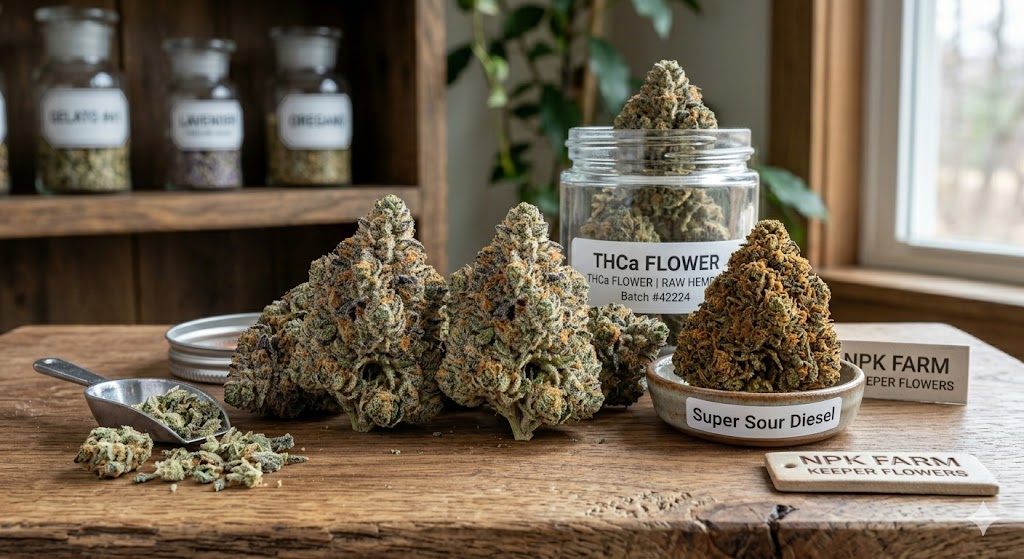
What Is THCa Flower and Why Is Every Smoke Shop Carrying It?

Walk into any smoke shop in 2026 and you’ll see an entire shelf that didn’t exist three years ago: THCa flower. It looks like cannabis, smells like cannabis, and — when you light it — acts like cannabis. But it ships legally to most states and sits right next to the rolling papers.
So what’s the deal?
THCa is the raw form of THC. Every cannabis plant produces THCa first. It’s non-psychoactive in its raw state — you could eat it straight off the plant and feel nothing. But the second you apply heat (smoking, vaping, baking), a chemical reaction called decarboxylation converts THCa into Delta-9 THC, which is the compound that gets you high.
Why it’s been legal. The 2018 Farm Bill made hemp legal as long as it contains less than 0.3% Delta-9 THC by dry weight. THCa flower passes that test because the THC hasn’t been activated yet. A bud testing at 25% THCa and 0.15% Delta-9 is technically compliant hemp — even though lighting it produces the same effect as dispensary-grade cannabis.
This legal gap is what created the THCa market. Growers breed high-THCa hemp strains, have them lab-tested for Delta-9 compliance, and sell them through smoke shops, online stores, and gas stations nationwide.
What to look for when buying. Not all THCa flower is the same. Here’s what separates good product from bad:
A Certificate of Analysis (COA) from a third-party lab is non-negotiable. It should show the THCa percentage, Delta-9 THC level, and test results for pesticides, heavy metals, and mold. If the shop can’t show you a COA, walk out.
Indoor-grown flower is generally higher quality than outdoor. Look for dense, well-trimmed buds with visible trichomes. If it’s dry, dusty, or smells like hay, it was either grown poorly or stored too long.
Strain names matter less than lab numbers. A “Gelato” from one grower and a “Gelato” from another can be completely different plants. Focus on the THCa percentage and the terpene profile listed on the COA.
The legal landscape is changing. Federal legislation signed in late 2025 redefines hemp to include total THC — meaning THCa would count toward the 0.3% limit. Enforcement is deferred until November 2026. After that date, most high-THCa flower becomes federally non-compliant. Several states have already moved ahead with their own restrictions.
If you’re a consumer, this is something to be aware of. If you’re a shop owner stocking THCa, stay on top of your state’s regulations — this market is shifting fast.